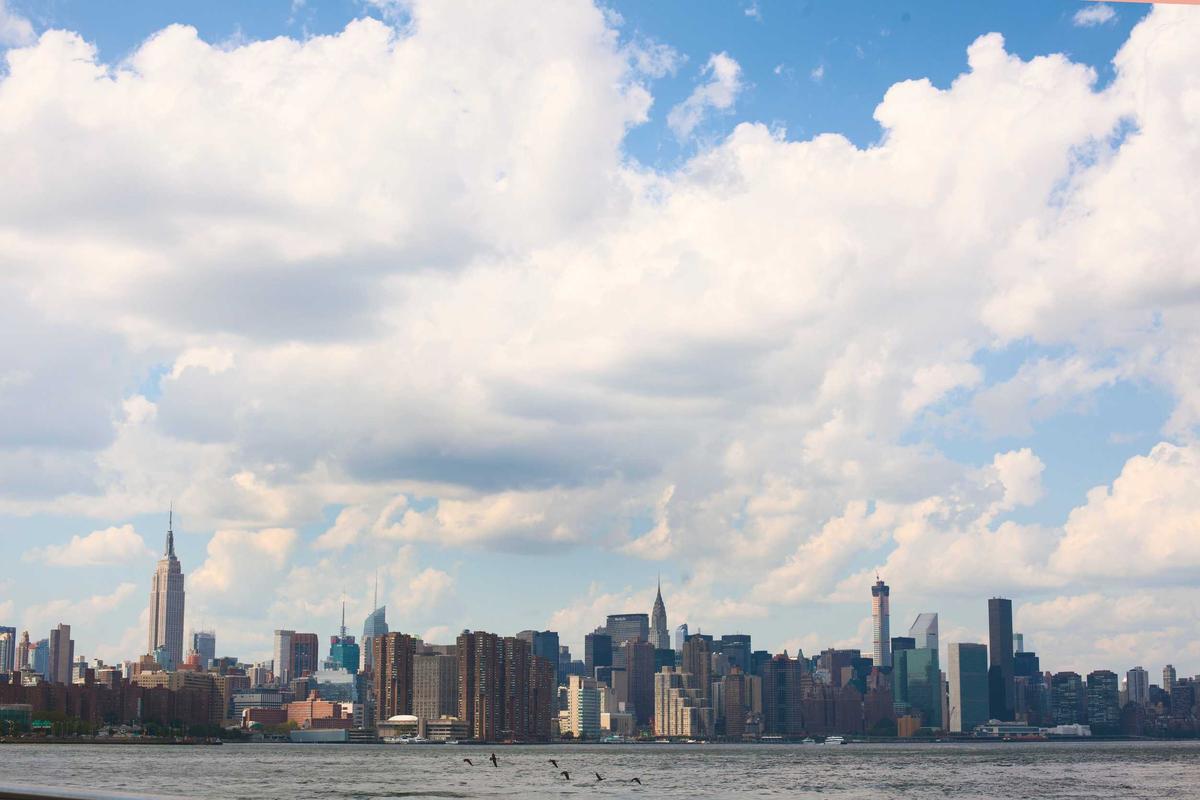

The International Monetary Fund has projected that global economic output growth will fall to 3 percent for 2026, a figure pushed down by high commodity prices and ongoing geopolitical uncertainty. The forecast, released in the IMF’s July 2026 update, carries particular significance for New York City, where the financial services sector serves as both a barometer and a transmission mechanism for global economic trends.
As reported by The New York Times, the IMF’s projection represents a downward revision from earlier estimates and reflects a confluence of factors including persistent commodity price pressures, supply chain disruptions, and the cooling of several major emerging economies. For New York’s financial institutions — which include the world’s largest banks, asset managers, and hedge funds — the revised outlook has implications across trading, lending, investment banking, and wealth management.
The 3 percent global growth figure, while not recessionary, represents a notable slowdown from the post-pandemic recovery years. It signals an environment in which corporate earnings growth may slow, credit conditions may tighten, and investment returns may moderate. For Wall Street, this translates into a complex operating environment: trading volumes may increase as investors reposition portfolios, but underwriting and advisory fees may decline as companies defer IPOs and acquisitions.
For New York City’s tax revenue, the IMF’s projection is a cautionary signal. The city’s budget is heavily dependent on tax revenue from the financial sector, including personal income taxes from high-earning finance professionals and corporate taxes from financial institutions. A slowdown in financial sector profitability typically translates into reduced tax revenue with a lag of one to two quarters, creating fiscal challenges for a city already grappling with the business exodus to Sun Belt states.
The commodity price pressures identified by the IMF have particular relevance for New York’s commodity trading community. The New York Mercantile Exchange (NYMEX), part of CME Group, is the world’s largest energy futures exchange. Elevated oil and gas prices drive trading volumes but also increase volatility, creating both opportunities and risks for the trading firms and banks that operate in this space. Several New York-based hedge funds have reported strong performance from commodity-focused strategies in 2026, though the sustainability of those gains depends on whether commodity prices remain elevated.
The IMF’s forecast also highlights divergent growth patterns across regions. The United States is expected to grow at a moderate pace, supported by consumer spending and business investment, but constrained by elevated interest rates and fiscal uncertainty. Europe faces more significant headwinds, with several major economies at risk of stagnation. China’s growth has slowed as its property sector continues to adjust. For New York-based multinational financial institutions, this regional divergence creates a complex operating landscape, with some markets contracting while others expand.
The Federal Reserve Bank of New York, which serves as the operational arm of the Federal Reserve System’s open market operations, has been closely monitoring these trends. The New York Fed’s economic indicators calendar, published on its website, tracks the data releases that financial markets use to assess the trajectory of the economy. In recent weeks, the data has painted a mixed picture: employment growth has moderated, inflation has eased but remains above the Fed’s target, and manufacturing surveys have shown weakness.
For New York’s real estate sector, the slower growth outlook adds another layer of complexity to an already challenging market. Commercial real estate in Manhattan has been under pressure from the shift to remote and hybrid work, which has reduced demand for office space. A slower economy could exacerbate this trend, as companies freeze hiring or reduce headcount, further reducing space requirements. Residential real estate, which has been more resilient, could see price moderation if job growth in the financial sector slows materially.
The city’s broader business community is also watching the IMF forecast closely. As the Council of Industry of Southeastern New York reported in its July 6 briefing, U.S. factory orders dropped 1.3 percent in May, with durable goods orders plunging 4.5 percent, breaking a streak of two consecutive monthly increases. This weakness in manufacturing, while not a direct driver of New York City’s service-oriented economy, affects the broader regional economy, including the upstate manufacturing corridor and the logistics networks that connect the region to national and global supply chains.
For small and medium-sized businesses in New York City, the slower growth environment presents a particular set of challenges. These businesses, which operate on thinner margins and with less access to capital than their larger counterparts, are more vulnerable to slowdowns in consumer spending. Restaurants, retailers, and service providers that depend on office workers and tourists are already dealing with reduced foot traffic from the shift to hybrid work; a broader economic slowdown could compound these pressures.
The city and state government responses will be critical. New York has limited fiscal capacity to stimulate the economy through spending, given existing budget pressures and the revenue implications of the business exodus. Federal policy, including interest rate decisions by the Federal Reserve and fiscal measures from Washington, will likely play a larger role in shaping the economic trajectory.
For investors and businesses in New York, the IMF’s forecast is a reminder that the global economic environment remains challenging. The city’s financial sector has navigated slowdowns before, and its depth of talent, capital, and institutional infrastructure provides resilience. But the combination of slower global growth, commodity price pressures, and the ongoing relocation of businesses to lower-cost states creates a uniquely complex set of headwinds that will test the adaptability of New York’s economy in the months ahead.